

Under the Microscope - Vol. 1
I recently brought home a reissue of a classic reggae album that I wanted for quite some time…..only to have my heart broken!
From the opening bass line, I knew something was off about this pressing. That rich low end, balanced by the delicate vocal harmonies was lost, almost like the singers were down in a well. Then came the pops and cracks. Mind you, this is the first time it has been played!
As a relative newcomer to the industry and vinyl collecting, I had never experienced this and wanted to learn more. Initial research pointed me to potential issues with the colored vinyl pressing, While helpful, I knew there was more to the story.
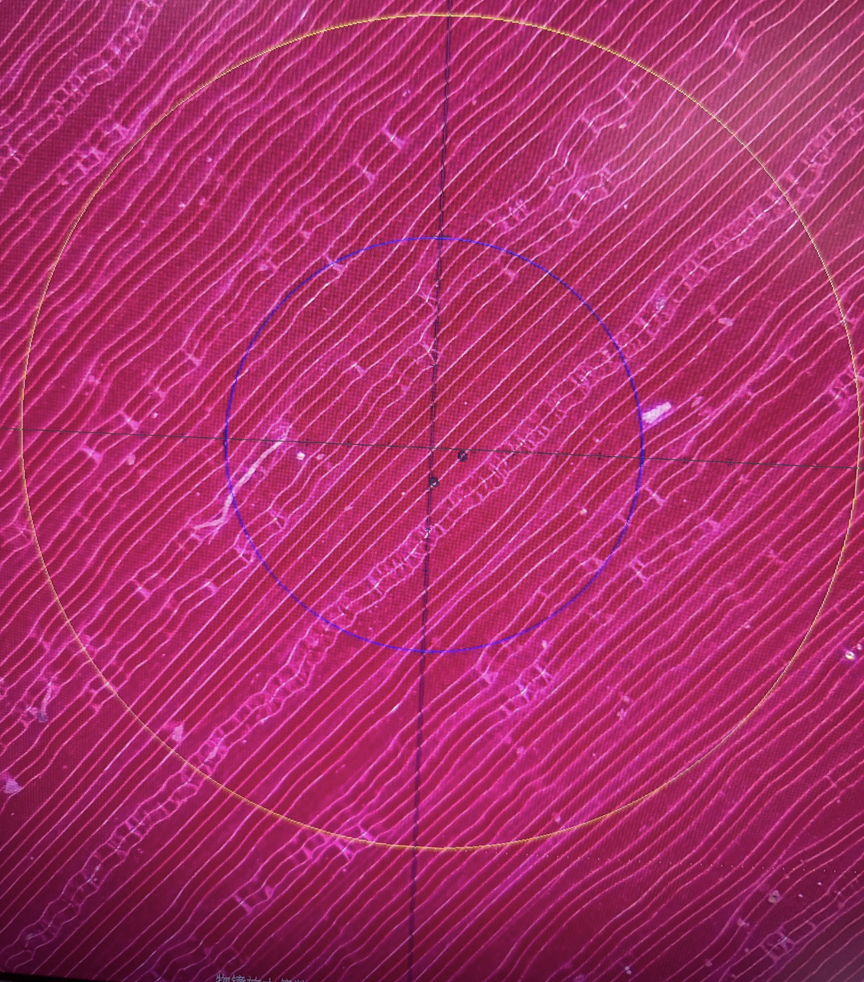
Under a microscope, a poor-quality vinyl LP re-issue reveals significant contamination — in the form of white blobs and streaks — across the entire record .
I sat down with our Production Manager, Seth Alder, to investigate using some of our QA/QC tools. The first step was to drop the needle on the record and listen. We diagnosed the popping in the right channel, followed by a significant amount of hiss between tracks. The popping then shifted to the left channel on the following track. Seth commented that non-fill could be the culprit. Non-fill is an issue where the vinyl doesn’t completely fill the groove as intended.
Next we weighed the record. Typically, records are pressed in either 140 gram or 180 gram formats. This one weighed in at 167 grams, out of spec for both. This can lead to inconsistencies in the thickness of the record, if the press was set for 140 grams or incomplete fill at the 180 gram setting.
As a final step, we set up the microscope to explore the pressing at a more detailed level (see pink image, above). This revealed significant contamination across the entire record. Numerous white streaks, blobs, and dots were observed. These could be from poorly mixed or overused regrinded PVC, paper contamination, or other fillers. The change in density of pressing materials translates into loss of integrity along the groove wall, potentially generating the noise we were hearing between tracks.
For comparison, I put a recent release from Citizen Vinyl pressed in Opaque Blue through the same battery of tests. This one is a nice, quiet pressing! Channel definition is clear and balanced. A few flecks on contamination are visible, but nothing compared to the streaking observed in the reissue. Weight was 143g, well within our specifications.
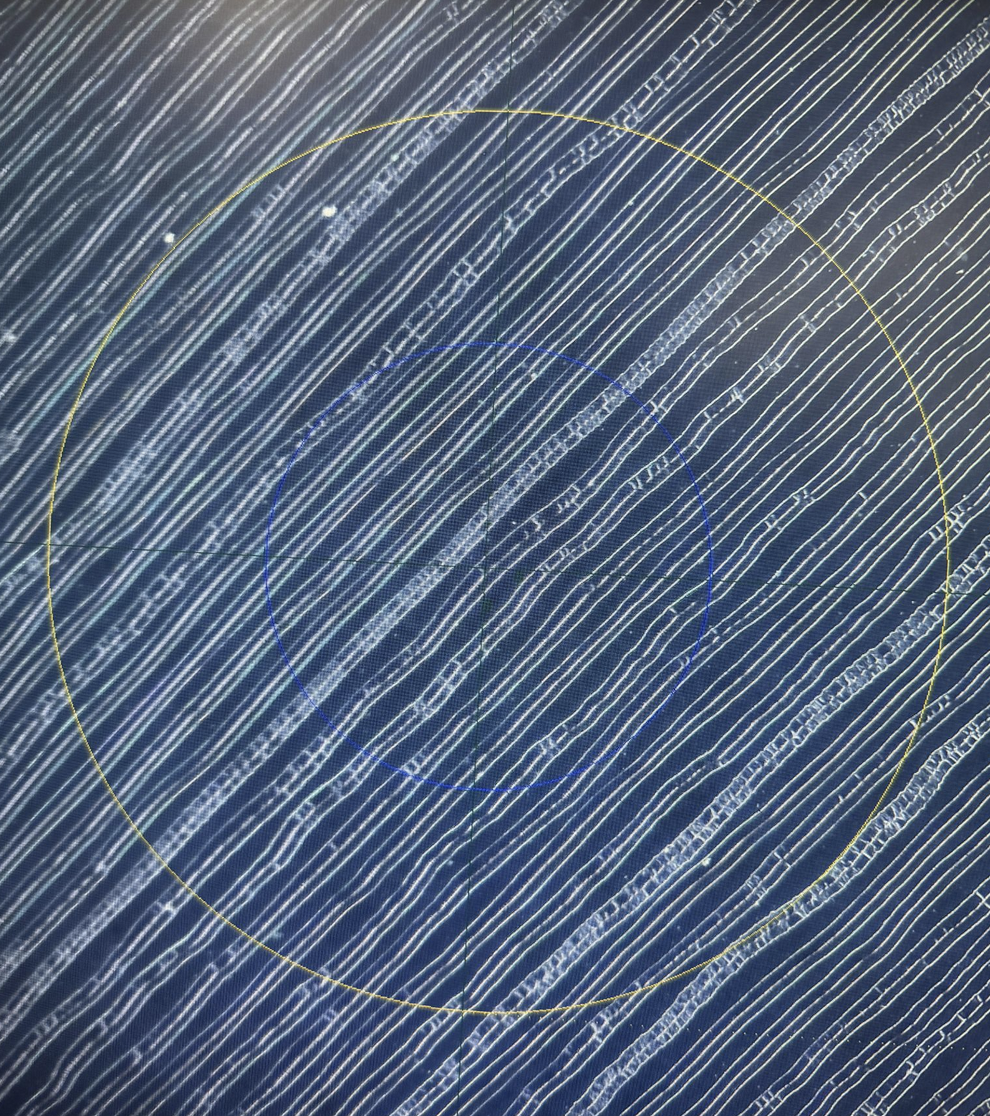
Under a microscope, an opaque blue vinyl LP, recently pressed at Citizen Vinyl, shows only a few flecks of contamination.
This is the type of consistency and quality that is the direct result of our “hands on” approach to QA/QC testing. Each session of pressings is played and reviewed by an actual human on a daily basis. We press extra units to allow for our technicians to have the freedom to recycle those that do not meet our standards. This includes our printed materials as well. All in the quest to deliver a superior product to our customers.
Future volumes in the series will be covering different approaches to mastering and plating, noteworthy pressing plants, along with a host of other topics. Feel free to drop me a line (brent@citizenvinyl.com) with any suggestions. I’m always listening!