

Q+A with Women in Vinyl Founder Jenn D'Eugenio
Meet Jenn D'Eugenio, the founder of ‘Women In Vinyl, a nonprofit working to raise funds that support women, female identifying and all minorities in this industry in their educational journey through scholarships, mentorships, job boards, business development and workshops to create, preserve and improve the art of music on vinyl.
Jenn is the author of the book "Women in Vinyl, The Art of Making Vinyl", and co host of The Women in Vinyl Podcast. She's also Vice President of Gold Rush Vinyl (one of only a handful of women owned pressing plants in the US) and former sales + customer service manager at Furnace Record Pressing. Jenn is dedicated to the art and creation of vinyl.
We're thrilled to learn more about her career and her insight into the obstacles women have faced in the vinyl manufacturing industry — and their glowing achievements!
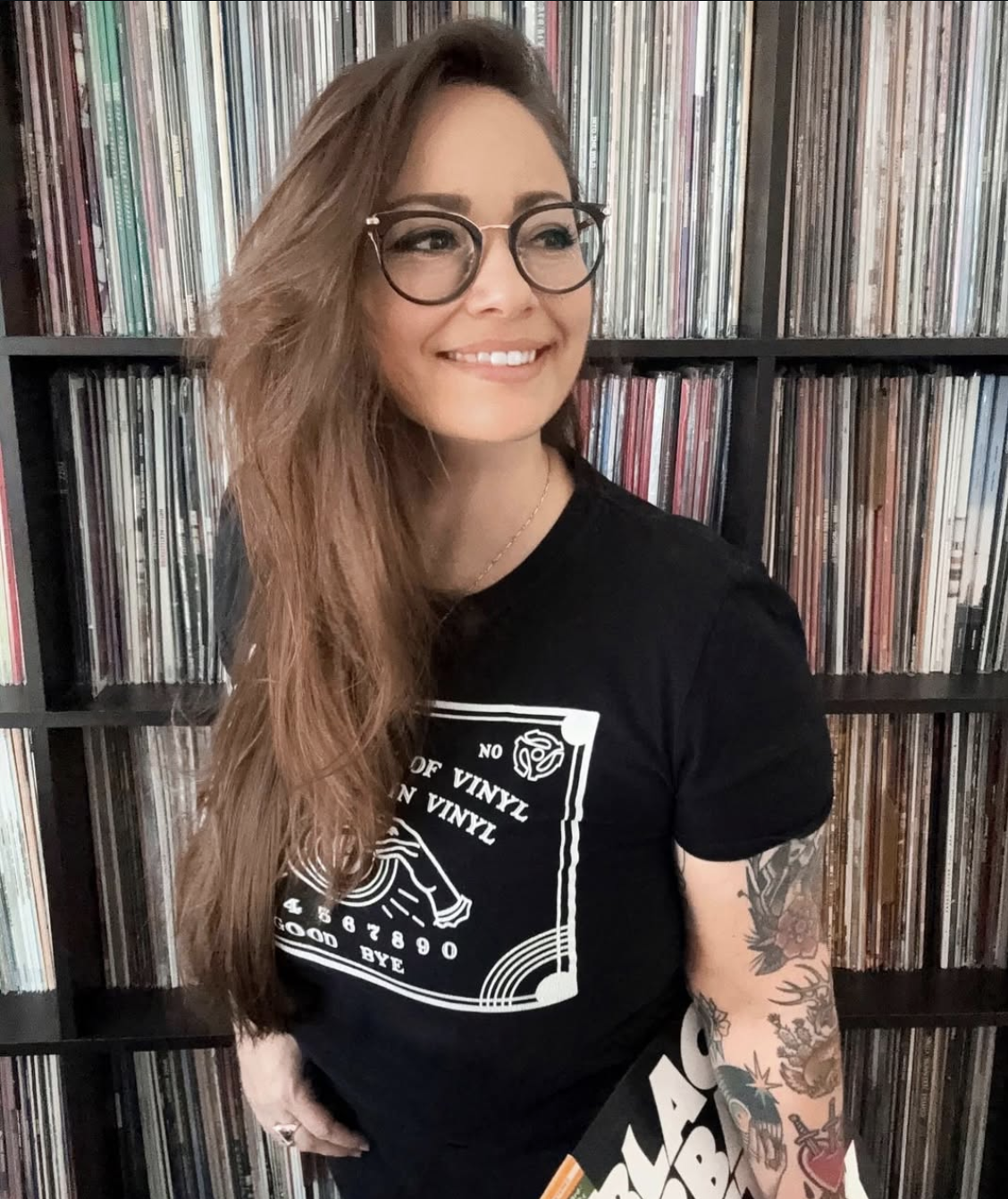
Why are women under-represented in leadership roles in vinyl manufacturing? What are a couple of the obstacles they face?
Vinyl as a format—and manufacturing generally—are very STEM-focused, these industries are also both historically male-dominated. This imbalance often starts early, as educational paths toward technical fields have traditionally been encouraged more for boys than girls. When industries develop that way, leadership tends to follow suit, creating an invisible bias toward men in those roles.
Another challenge is awareness. Many people—especially young women—don’t realize that careers like lacquer cutting, electroplating, press operation, or production management even exist. Women are often steered toward administrative roles rather than hands-on technical work. Even for me, as a music-obsessed teenager buying vinyl, CDs, and cassettes, careers in music were never presented as an option.
It’s important for women to be part of these conversations because innovation requires diversity. The vinyl industry has relied on many of the same processes, and bringing new voices into the space helps move things forward. The encouraging part is that this is beginning to change as more women enter the field and as the industry becomes more open and supportive to mentorship, visibility, and access—something Women in Vinyl is working hard on.
What attracted you to work in the vinyl manufacturing industry?
I’ve been buying records for over 25 years, but I grew up in a time when CDs and cassettes were the main way we consumed music. Jobs in vinyl manufacturing weren’t really a thing then, so I didn’t realize there were career paths connected to making records.
My background actually started in design and later shifted into career advising, where I discovered how much I enjoy helping people find their way and bring their ideas to life. Vinyl manufacturing ended up being a perfect intersection of those interests. I get to work with artists and labels to help bring their music into the world while also creating a physical package that showcases their work.
I also really enjoy the logistical puzzle of coordinating all the moving parts that turn a set of audio files into a finished record someone can hold in their hands. Admittedly, I’m also overly organized so that helps with planning and honest reliable timelines as well.
What is one career highlight you can share?
I’ll narrow it down to two from the manufacturing side and one from the nonprofit side. On the manufacturing side, one was helping the Smashing Pumpkins bring their archival releases into the world on vinyl when I was working at Furnace. The Smashing Pumpkins are one of my all time favorite bands, so that was something I hold very special. Another on the pressing side was helping with RuPaul’s Gold Series releases at Gold Rush. My good friend Jett cut the lacquers, and I got to manufacture it. The day Ru calls you on the phone, is a day you’ll never forget. I feel so honored to have helped such an icon put their collection of music out on vinyl.
On the nonprofit side - seeing the community organically created by Women in Vinyl and how it has grown beyond what I could have imagined. It started as a blog and Instagram account highlighting women working in the industry, and it has grown into a nonprofit with scholarships, mentorship programs, and educational initiatives. I’ve been honored to have such an amazing board, and group of volunteers, the relationships born out of the community is humbling.
How has the vinyl pressing industry evolved in the 8 years you’ve worked in it?
It’s actually crazy to see the ebb and flow over that time. From having to do a ton of outreach to fill capacity, to COVID and supply chain issues that caused manufacturing pipelines to be backlogged to an insane degree, to now a leveling out and sadly some small plants closing. It forced us all into a lot of quick and necessary adaptations.
Records have also become seen as an investment, and luxury item in the current economy, we’re now battling with consumers being able to afford them, and how that will impact manufacturing and demand. At the same time, we’re still seeing growth with artists and labels becoming more creative with packaging, and limited runs as well as innovation with injection moulding technology. So while the industry continues to have its ups and downs, it isn’t going anywhere. More artists and fans are curious about how records are actually made, which has opened the door for education and transparency about the process.
Women in Vinyl was created the same year you started working in this industry — was it about creating the support system you wanted?
It was about creating visibility and accessibility. I wanted people to hear these women’s voices, and for those who love records to know there is a place for them here. When I started working in vinyl manufacturing, I quickly realized there were many talented women in the industry—but their stories weren’t always visible. Ali Miller for example was the Vice President of Furnace and she was a strong voice of our day to day work environment. I was also introduced to people running labels like Lisa of Frontier Records, or Carrie of Record Store Day - where were all these amazing women hiding?!
I wanted to create something that highlighted those voices and showed that there are many ways to build a career in vinyl beyond being an artist. That’s how Women in Vinyl started, simply sharing stories of women working across the entire supply chain. If it grew I knew I wanted to make it an educational nonprofit, so I learned the steps to what that took, persevered, and here we are!
What positive changes have you seen for women in the vinyl industry?
One of the most encouraging changes is visibility. We’re seeing more women entering our industry and most notably at record stores. There’s also been a lot of wonderful support for our community from organizations that want to make the industry more inclusive.
We’ve launched programs like our mentorship initiative strictly focused on physical media, scholarships tailored to hands on work like vinyl pressing or lathe cut camp, and industry events are helping people connect and build careers like sending someone to Making Vinyl for the past five years.
Perhaps most importantly, younger generations are starting to enter the industry and expect diversity and inclusion to be the norm and we do too!
What are one or two areas that still need work for women to thrive in this industry?
Education and access. Many people simply don’t realize that our careers exist, which limits who sees the industry as a possible path. We also don’t have clear educational pathways into our field. Through Women in Vinyl, we’re working to change that by visiting schools with audio and music programs to talk about the
wide range of jobs in our industry. The more we do, the more opportunities open for clubs, organizations, and eventually curriculum. That was part of the reason I wrote ‘The Art of Making Vinyl’ book the way I did. By sharing what we do—and highlighting the women already working in these roles—we hope to help young people see representation of themselves in this industry and realize there’s a place for them here.